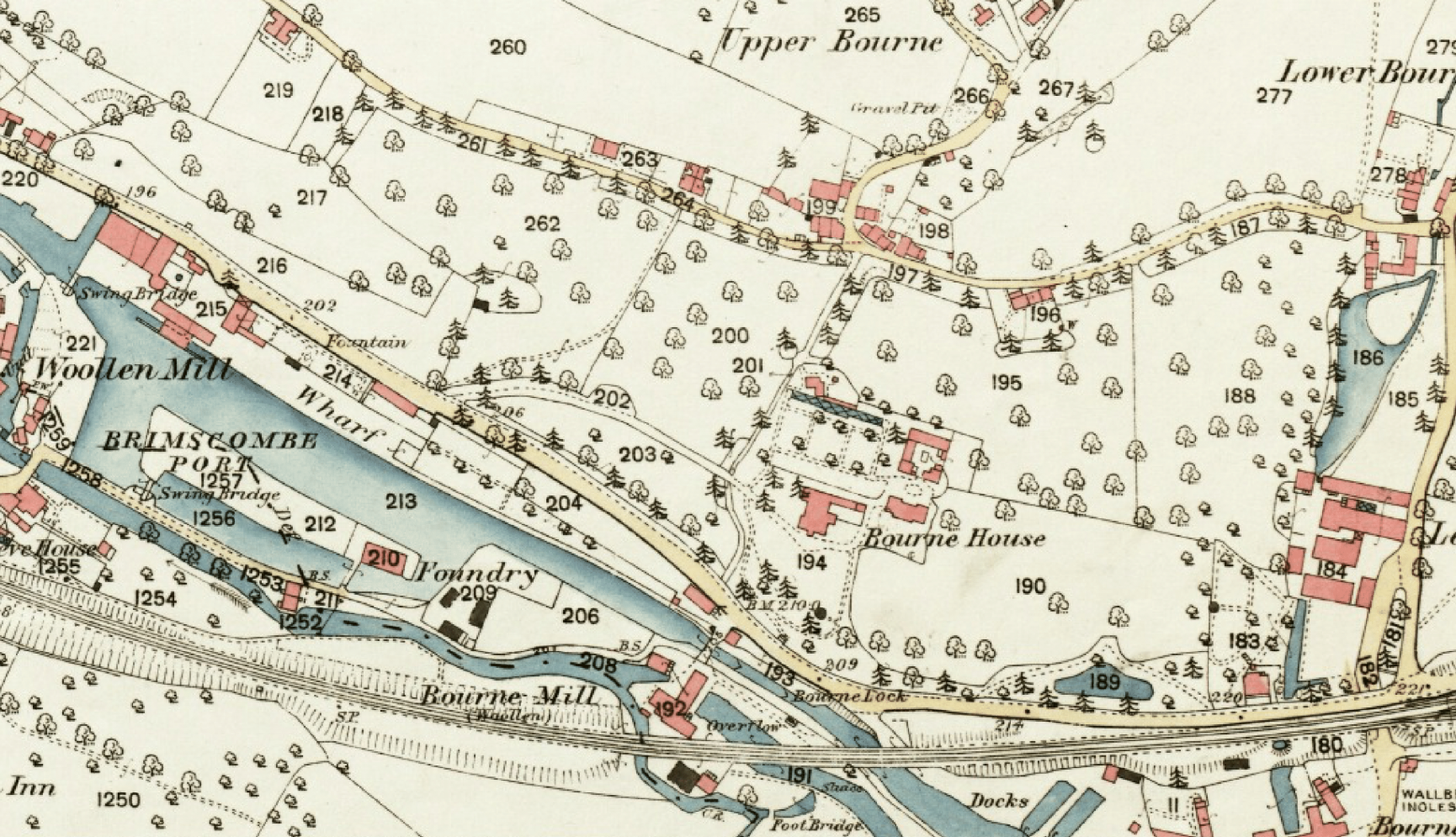
This site is just a small repository for some surviving words and pictures describing the area around Bourne House and Bourne Mill, just outside Brimscombe port in Brimscombe, Stroud, Gloucestershire.
They have been collected with the generous cooperation of friends & neighbours during the Covid lock downs of 2020 and the fantastic resources of:
- The Stroud Local History Society
- Gloucestershire archives
- Johnhearfield.com
- SLHS Shepheard photograph collection
- Gloucestershire Society for Industrial Archaeology
- Know Your Place
Bourne Lock, Bridge and Weir immediately north of Bourne Mill are Grade II listed. Built c1785 for the Thames & Severn Canal Company. The lock is unique on the Cotswold Canals as it had to allow the passage of both the long and narrow Thames barges, and the short but wide Severn trows, as they approached the interchange port between the Thames and Severn and Stroudwater canals.
Bourne Mill, now a Grade II listed building, was first used for textile production around 1690. The buildings we see today were probably built around 1830 and used for the manufacturing of Broadcloth and Kerseymere and then mill puff and shoddy. 1910 saw the mill becoming a centre for the manufacture of umbrella and walking sticks, exported across the British Empire.
Bourne House first appears in the records in 1820 occupied by Aaron Evans, a woollen manufacturer. Around 1863 Richard Grist and his family move in and stay for the next 30+ years. Richard Grist also manufactured mill puff and shoddy at Bourne Mill.
Sold in 1893 with the description of “Bourne House, model farm buildings, stabling, coach house, piggeries, duck & poultry houses, ornamental pleasure grounds, lawn tennis ground and enclosures of pasture/orchard land”.
Although the house has stayed in private ownership, the grounds to the north were developed into Brocks nursery and eventually turned into housing.
A small collection of maps illustrates the development of Brimscombe port on the Thames and Severn canal and Bourne area from 1882 through to the present day. And an interesting collection of photographs allow us to peer into the past and see the landscape as it once was.
If you would like to comment or help us with any pictures or memories you might have then please visit our Facebook for comments and discussion or our Instagram for the latest pictures and/or information. Or contact us through our contacts page here.
Thank you